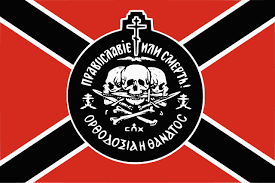
Death to Compromise
God despises compromise of the Faith.

“We must not mind insulting men, if by respecting them we offend God.” - St. John Chrysostom
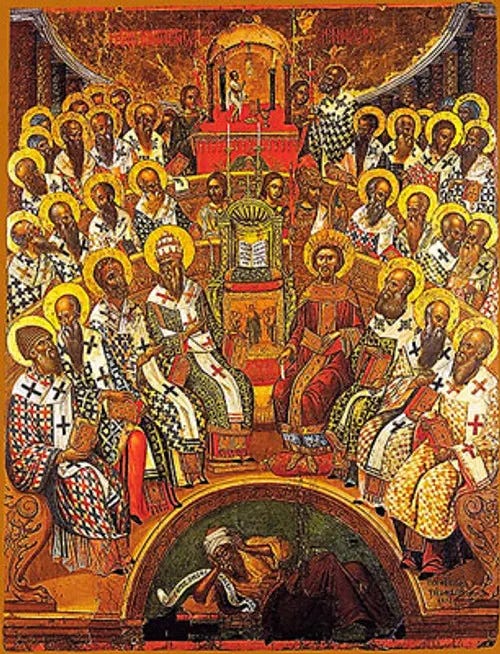
Throughout the history of the Church, even during the time of the Old Testament, there have been many times when the faithful were tempted strongly to compromise the True Faith in exchange for some worldly benefit. Many, sadly, fell into grave sin under this temptation, and it is something we must all beware of, because God hates compromise. This is something which is manifest when one begins to analyze all the scenarios when the Faith was compromised.
In Ancient Israel, whenever the Israelites began to worship false gods, they were punished by God for their disobedience. At first, He would exhort them to repentance through prophets like Elijah. However, when they refused to repent, they were punished - their enemies would triumph over them and enslave them. God’s anger would bear upon them, and they would thus stand condemned before the Lord until they turned away from their sin and back towards him.
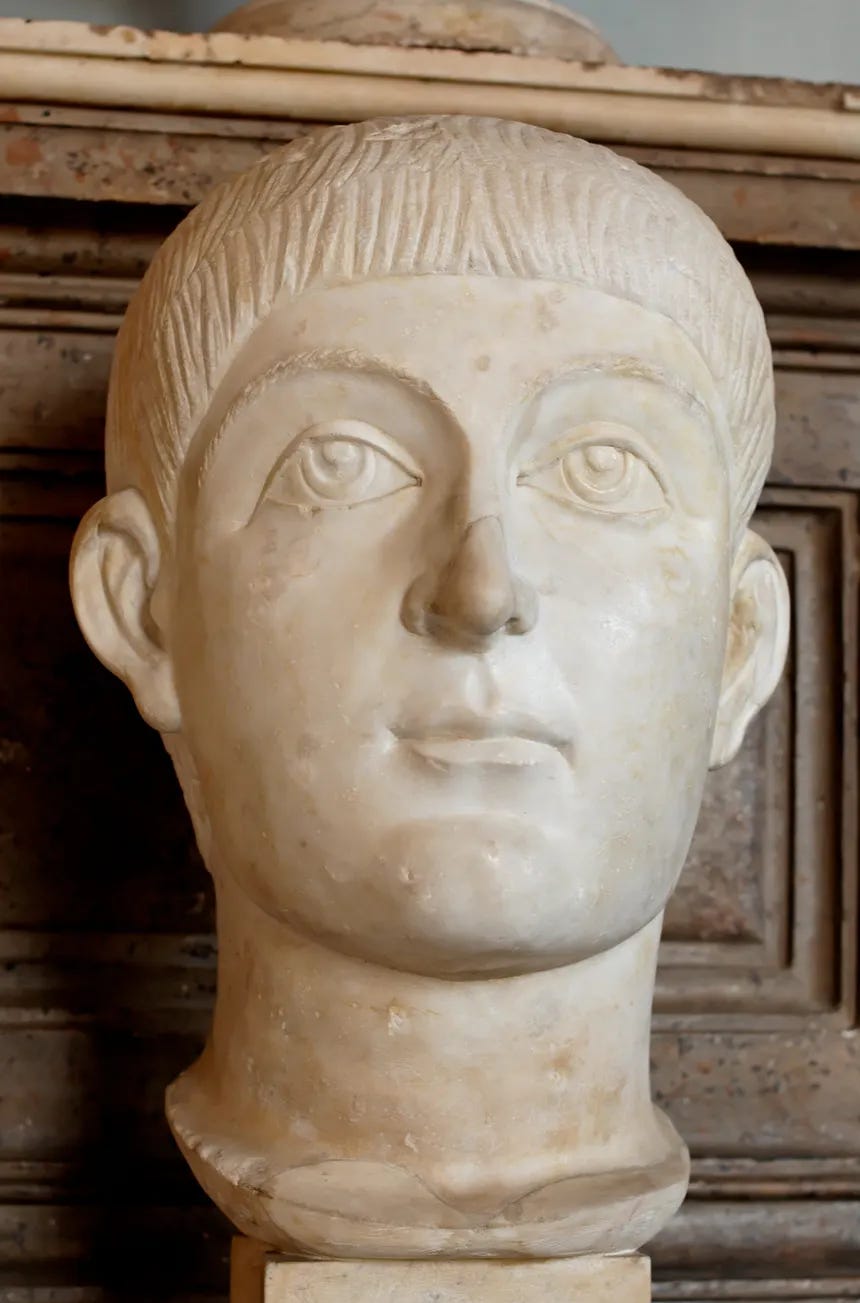
This pattern of the Old Israel continued into the New Israel, the Church. During the Arian controversy, in an attempt to create a compromise between the Arians and the Orthodox, the heresy of Semi-Arianism was created. The Semi-Arians held that Christ was of a similar Essence to God the Father, but not the same Essence - contradicting the Orthodox view that Christ was indeed of the same substance as God the Father, as well as the Arian blasphemy that Christ was a created being with a created Essence. Semi-Arianism was extremely popular and enjoyed the support of many Roman Emperors - notably even the sons of St. Constantine. However, the efforts the our Holy Orthodox Fathers, such as St. Basil the Great, helped preserve the Faith, and Orthodox Christianity eventually won out. Its victory was finalized when God brought defeat in battle to the last Semi-Arian Emperor, Valens, who fell at the hands of the Goths.
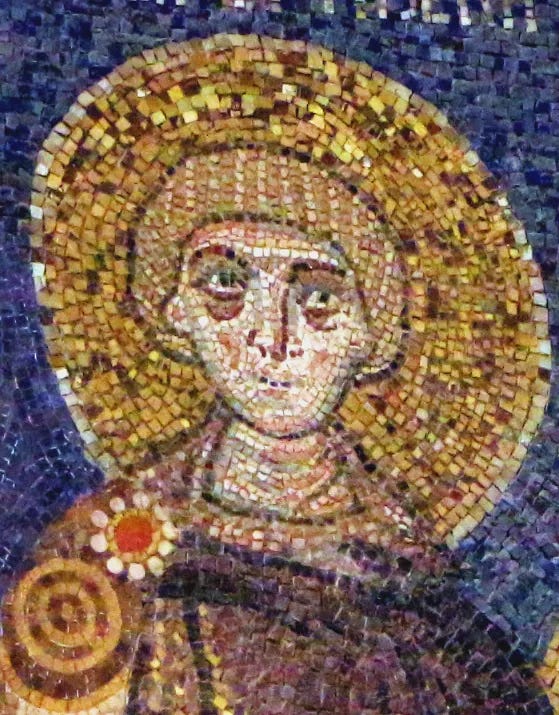
Some time after the great Arian controversies, a new heresy emerged - Monophysitism. This heresy asserted that Christ had only one nature - one that was either only divine or a composite nature of the human and the divine. As a compromise with this 5th century heresy (which survives to this day), the 7th century Emperor Heraclitus and his Patriarch, Sergius, came up with the heresies of Monothelitism and Monoenergism. These asserted that although Christ had two natures (the Orthodox teaching), he had only one will and one energy. The purpose of this compromise for the most part was political - the Emperor wanted the Monophysites under his fold, and felt that this compromise was the way to get them to submit to him.
Interestingly enough, this Emperor Heraclitus is the very same who saved the Eastern Roman Empire from the clutches of the Sassanid Persians. However, he lost all of the gains he had made from the Byzantine-Sassanid War when the Islamic invasions began. Heraclitus lost the Battle of Yarmouk to the rising Rashidun Caliphate, and subsequently, the Levant fell into the hands of Islam. God thus punished the Eastern Roman Empire for its embrace of Monothelitism and the Levantine peoples for their adoption of the Monophysite heresy.
Thankfully, due to the efforts of Fathers like St Maximus the Confessor, Monothelitism and Monoenergism were condemned at the 6th Ecumenical Council, and Orthodoxy triumphed yet again.
Yet again, this pattern was reiterated a third time - this time with the Unionist movement in the late Roman Empire during the 14th and 15th centuries. The Emperors of the time wanted to gain the support of the Latin West in fighting Islam, and so decided to compromise the Faith and agree to union with the Pope. The first Emperor to do this was Michael VIII, who saw the continued decline of Eastern Rome during his reign. He died in great shame, as he was excommunicated even by the Roman Catholic Church, having already been cut off from the Orthodox Church.
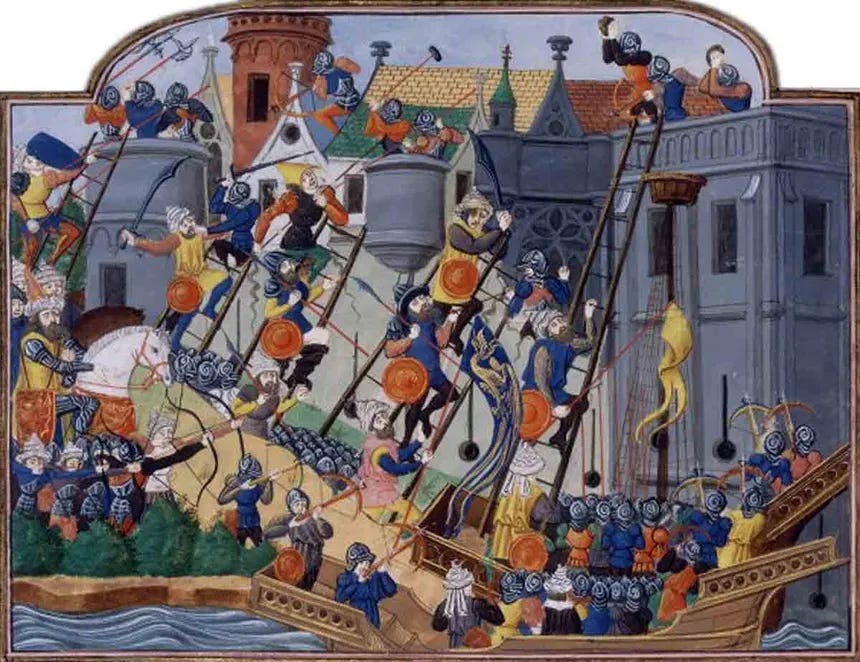
After him came a series of other Orthodox Emperors, up to John VIII, who infamously accept the union at the Council of Florence. He persecuted St. Mark of Ephesus, and stood against the consensus of the Orthodox Church in rejecting the Council. After his death, the next Uniate Emperor was Constantine XI who died fighting the Ottomans as Constatinopole fell into their hands. God thus punished the Uniates, as he had done with the Arians, Semi-Arians, Monothelites, Monoenergists, and Monophysites.
Today, we see the spirit of Semi-Arianism, Uniatism, and Monothelitism revived yet again, in the form of Ecumenism. We are called to compromise our Orthodox Faith for unity with the Latins, the Monophysites, the Protestants, and all the different heretical teachings, with the claim that we all worship the same God. Indeed, even some Muslims call upon Ecumenist rhetoric - claiming that Christianity and Islam must unite to fight Western degeneracy. Jews, too, appeal to this rhetoric sometimes, saying that we ought to preserve our “Judeo-Christian” values. For the Christian, and indeed, especially the Orthodox Christian, there can be no such compromise. We are not united with any heresy against any other heresy. We are only united in fighting all forms of error, for that which is not with Christ is against Him.
Ecumenism, whether from the Left or from the Right, is a heresy. Compromise with heresy is equal to heresy. We must not hope in the World - in godless earthly princes and conniving blasphemers. Rather, we must hope in God, Who will preserve His Church, so long as She does not give in to the temptation to compromise with error. For indeed, the Church withstood and endured every heresy, every compromise, every pagan invasion by one means and by one means only - unwavering loyalty to Christ, our God.