
Refutation of a Latin Response
"Seeking Heaven" Refuted
“Divinity and divine realities are in some respects knowable and in some respects unknowable. They are knowable in the contemplation of what appertains to God's Essence and unknowable as regards that Essence itself.” - St. Maximus the Confessor
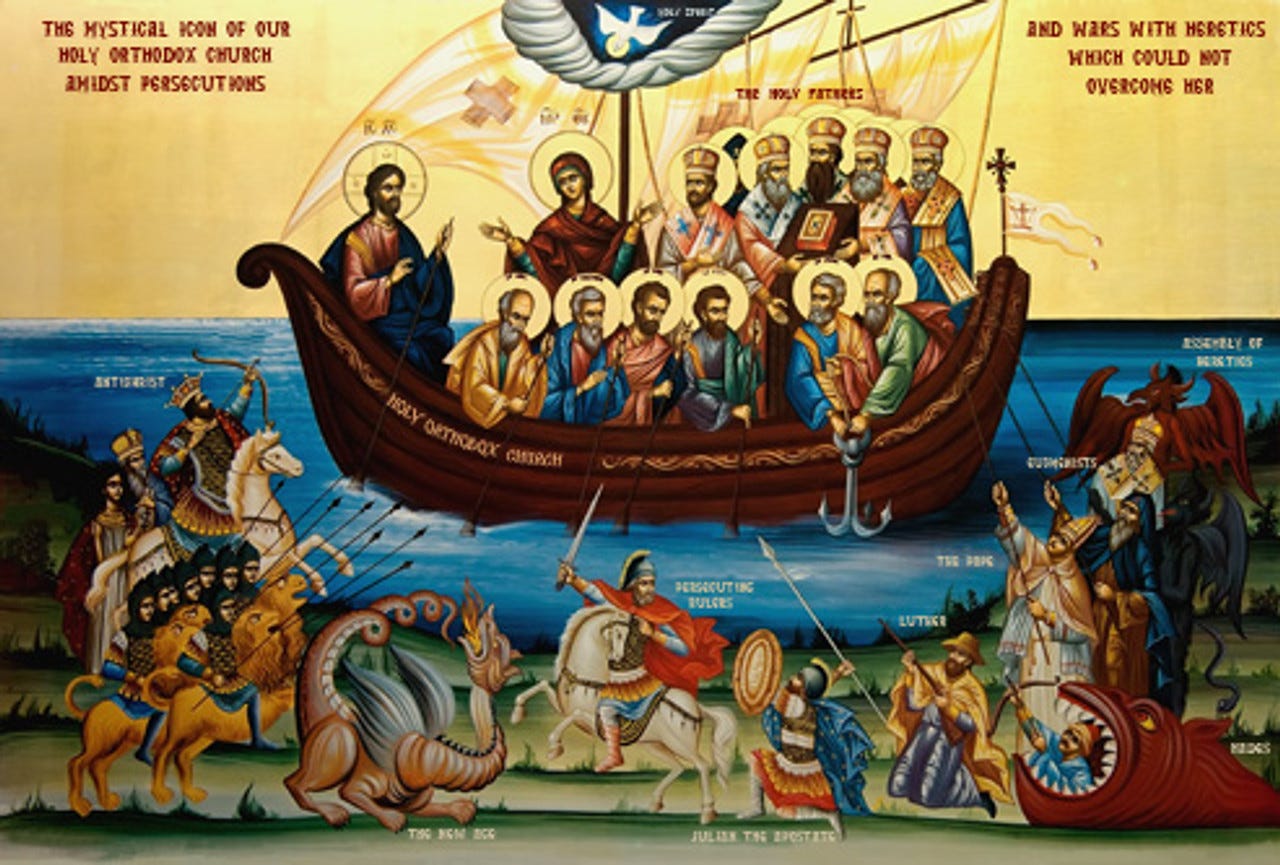
Some time ago, I wrote an article titled “Why We Do Not Worship the Same God as the Latins.” A certain Latin, going by the alias of “Seeking Heaven,” issued this response. Here, I intend to address each point made in his post, and hopefully, this interaction will be beneficial for both sides of the question.
To begin, Seeking Heaven states the following:
You [Pseudo-Clement] claim that Catholicism teaches grace as a “created accident” and denies participation in God, but that is not what the Church teaches. The Catechism of the Catholic Church (CCC 1996-2000) states clearly that grace is a participation in God’s divine life. CCC 1997 affirms, “Grace is a participation in the life of God. It introduces us into the intimacy of Trinitarian life.” CCC 1999 even calls it “deifying grace”, showing that Catholic theology not only acknowledges theosis but explicitly teaches it.
It does not matter if Latin theology pays lip service to “theosis” or “deification,” the whole point of the Orthodox argument against the Latins in regard to this is that such a thing is impossible with Absolute Divine Simplicity and Created Grace. May I ask, by what means do we participate in the “intimacy of Trinitarian life”? What does that even mean in Latin theology? According to you, God is absolutely simple - His attributes are reducible to His Essence. God is identical to His Essence in Latin theology, is He not? Then how can we participate in Him? How can we contemplate Him noetically, as St Maximus and the Holy Fathers teach?
There is no possibility for participation in God under Roman Catholic theology. If you say that one can participate in God, is He participating in the Divine Essence? This is an impossibility. You can then say that we participate in Him through Divine Grace - but to you, this is something Created. How can one participate in the Life of the Uncreated Trinity by Created means? St. Gregory Palamas refuted this heresy in his Triads (which I suggest you read), addressing the similar heresy of Barlaam.
To add to all of this, the notion that grace is not a created accident in Papism is false. Thomas Aquinas explicitly teaches that Grace is created, which is why, for example, he talks about Christ not having created grace in his Quaestiones Disputatae de Veritate. In his view, Grace is not an Uncreated Energy that flows forth from the Divine Essence and sanctifies Man, as the divine Gregory Palamas taught. Rather, it is a supernatural creation, imparted upon man. For Aquinas, it is an accident in the sense that it is accidental to the soul, and not part of its substance.
To reinforce this, one can also look at the Summa Theologica, where he states, “Hence no accident is called being as if it had being, but because by it something is; hence it is said to belong to a being rather to be a being (Metaph. vii, text. 2). And because to become and to be corrupted belong to what is, properly speaking, no accident comes into being or is corrupted, but is said to come into being and to be corrupted inasmuch as its subject begins or ceases to be in act with this accident. And thus grace is said to be created inasmuch as men are created with reference to it, i.e. are given a new being out of nothing, i.e. not from merits, according to Ephesians 2:10, ‘created in Jesus Christ in good works.’” (Prima Secundae Pars, Question 110, Article 2, Reply to Objection 3).
Of course, he is not alone in affirming this. The Council of Trent also states that, “Finally the unique formal cause [of salvation] is the ‘justice of God, not that by which He Himself is just, but by which He makes us just,’ that, namely, by which, when we are endowed with it by him, we are renewed in the spirit of our mind, and not only are we reputed, but we are truly called and are just, receiving justice within us” (Session VI, Chapter 7).
Thus, according to Trent, we do not directly participate in the Divine Energy of God’s Justice, as the Orthodox Fathers teach, but rather, we are declared just and receive Justice as an activity distinct from God.
Seeking Heaven then proceeds:
You also suggest that Catholic theology is rooted in Greek philosophy rather than Scripture and the Church Fathers, but this is not the case. Many of the same Church Fathers venerated in Orthodoxy—St. Basil the Great, St. Gregory of Nyssa, and St. John of Damascus—describe God in ways that align directly with Catholic teaching. They distinguish between God’s essence and His actions, just as Catholic theology does.
The distinction between God’s Essence and His Actions in Catholic theology is not the Essence-Energies Distinction in Orthodox theology. In Orthodoxy, God’s Divine Energies are also God - they are the aspect of God which is knowable according to St Maximus and the “Back of God” according to Exodus 33. This is the Patristic and Biblical teaching - that they are God, although not the Divine Essence. The distinctions drawn by St Basil the Great, St Gregory of Nyssa, and St John Damascene are the Essence-Energy Distinction. Contrast this with Catholic theology, where God’s Actions cannot be identical to Him, because God is identical to His Essence per Absolute Divine Simplicity.
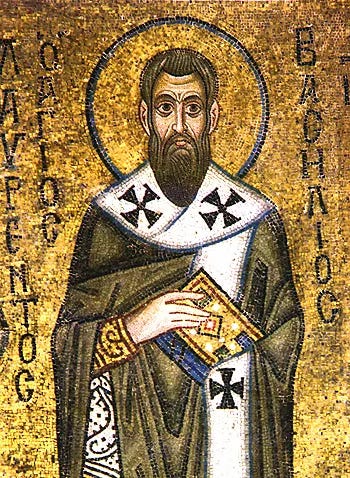
To illustrate this, I will cite St. Basil the Great’s Letter 234, which states, “‘Do you worship what you know or what you do not know?’ If I answer, ‘I worship what I know,’ they immediately reply, ‘What is the essence of the object of worship?’ Then, if I confess that I am ignorant of the essence, they turn on me again and say, ‘So you worship you know not what.’ I answer that the word to know has many meanings. We say that we know the greatness of God, His power, His wisdom, His goodness, His providence over us, and the justness of His judgment; but not His very essence….For they confess themselves that there is a distinction between the essence and each one of the attributes enumerated. The operations are various, and the essence simple, but we say that we know our God from His operations, but do not undertake to approach near to His essence. His operations come down to us, but His essence remains beyond our reach.”
If God’s operations come down to us, but His Essence is unknowable, then how do we know God? As St. Basil clarifies, it is through His attributes. Now, are these attributes the Energies of Orthodox theology or the Actions of Catholic theology? Well, they must be the Energies of Orthodox theology, since they are not reducible to the Essence, distinct from it, and are the means by which we know God. If they were merely created actions of God, then we would really be unable to know God. However, since they are God, then we know for certain that we can know God through His attributes.
To fully dispel any notion that St. Basil is referring to created operations or to Absolute Divine Simplicity, here he explicitly declares God’s attributes cannot be reduced to His Essence, saying, “But God, he says, is simple, and whatever attribute of Him you have reckoned as knowable is of His essence. But tile absurdities involved in this sophism are innumerable. When all these high attributes have been enumerated, are they all names of one essence? And is there the same mutual force in His awfulness and His loving-kindness, His justice and His creative power, His providence and His foreknowledge, and His bestowal of rewards and punishments, His majesty and His providence? In mentioning any one of these do we declare His essence ? If they say, yes, let them not ask if we know the essence of God, but let them enquire of us whether we know God to be awful, or just, or merciful” (ibid).
Your theology is not Patristic, it is Neoplatonic. It was Plotinus who held to Absolute Divine Simplicity - not the Holy Fathers. They did hold to Divine Simplicity (God is not composed of parts), but this is not identical to Absolute Divine Simplicity (that God’s attributes are reducible to His Essence).
He goes on:
Furthermore, the claim that Catholics do not understand Scripture or Tradition does not reflect reality. The Catholic Church was instrumental in canonizing the Bible, and many of Christianity’s greatest theologians—St. Augustine, St. Gregory the Great, and St. Thomas Aquinas—deeply engaged with both Scripture and the teachings of the Church Fathers.
It was the Orthodox Catholic Church that canonized the Bible, not Papism, a pale reminiscence of what the Western Orthodox Church used to be. The appeal to Catholicism having the “best theologians” is more of an appeal to sentiment than anything else. In the Orthodox world, no one cares about Aquinas. We do not consider him a great theologian. Sts. Augustine and Gregory the Great are revered in Orthodoxy too, by the way, although they had some errors. The latter we especially love.
Nonetheless, it seems, based on the Fathers and the Scriptures, that the theologians of Rome truly are ignorant. They did not actually understand the Fathers properly, unlike in the East, because they relied to heavily on Aristotle and other Greek philosophers. The Scholastics took the idea of Absolute Divine Simplicity for granted, and assumed it to be true merely based on the fact that it is the necessary conclusion of the Classical arguments for the existence of God. They, much like the medieval Muslims, placed Aristotle on a pedestal, and considered him as an authority. They even referred to him as “the Philosopher.” All of this is most clearly evidenced in Aquinas, and the way in which he cites Aristotle as an authority on many issues.
He then continues:
The Catechism (CCC 233, 253-255) teaches that there is only one God, shared by all who confess the Holy Trinity.
The Orthodox and Catholic Churches differ on theological expressions, such as the Essence-Energy Distinction vs. Divine Simplicity, but these are not differences in whom we worship—only in how we explain divine mystery.
To claim that Catholics worship a “different God” denies the unity of the Trinity confessed by both traditions in the Nicene Creed. It is true that many Catholics may not fully study Sacred Tradition or actively live their faith, but this has no bearing on the objective truth of Catholic doctrine.
If you believe in a God who is identical to His Essence, and deny the Distinction between His Divine Essence and His Energies, you teach a God who does not exist. The difference between Orthodox and Catholic theology is so fundamental, that there has been a schism for 1,000 years. This is not a case of differing in terms of “theological expressions.” It is a difference in essential theology.
As I have explained, Absolute Divine Simplicity and Created Grace simply do not allow for participation in God, as the Holy Fathers teach. If God is identical to His Essence, and the Essence is unknowable, then God is unknowable. Citing the Catechism of the Catholic Church and claiming that Catholicism does not teach grace is a “created accident” (which it does), ignores the problem entirely. It fails to address the crux of the issue which is that there is a contradiction in Catholic theology. The Fathers say that we can contemplate and participate in God. The Eucharist is evidence of this. Yet Absolute Divine Simplicity holds that God is reducible to His Essence. No one would say that it is possible to contemplate and partake of the Essence - so how then do we contemplate and participate in God? Quite frankly, it must be through His Uncreated Energies - which refutes the Roman Catholic idea that God’s attributes are reducible to His Essence, since God’s attributes (love, mercy, compassion, etc.) are His Energies.
And finally, he concludes with this:
Unfortunately, articles like this contribute to the very divisions that have wounded the Body of Christ for centuries. Schisms were not just the result of theological disagreements, but often a lack of critical thinking, misunderstanding, and pride. True dialogue requires clarity, charity, and a willingness to understand—not just to argue.
That being said, I sincerely pray for the proper unity of our Churches—not one based on compromise, but on truth. As Catholics and Orthodox, we share a rich and sacred heritage, a love for Christ, and a calling to holiness. May we see the greater picture of our purpose here on earth: to glorify God, to become more like Him, and to walk in the light of His love. I truly hope that.
To quote the great Metropolitan Tikhon (Shevkunov), “Catholics are not even a Church and as a result not even Christian.” The Body of Christ is One and Whole - it is the Holy Orthodox Catholic Church. Rome is not the Church. I too am grieved by the Great Schism, and hope for a reunion in Truth - but that means abandoning Papal Infallibility, the Filioque, Created Grace, Purgatory, and all other Roman innovations. Rome is not likely to do this. Thankfully though, many Latins are able to do this, as is evident by those who have been received into the Orthodox Church.
Overall, Seeking Heaven’s response did not resolve the issue at stake. He did not answer my objections from St. Maximus the Confessor or from Exodus 33. He seemingly did not comprehend that my attacks on Catholicism making God unknowable are not a statement of what Catholic doctrine explicitly says, but rather, what the logical conclusion of Absolute Divine Simplicity and Created Grace are. He called me out on saying Catholics are ignorant of Scripture and the Fathers, which was an irrelevant point that does not resolve the dilemma of Rome’s Platonic heresy. He also claimed that Catholicism does not teach grace is a “created accident,” despite what their church has historically taught through Thomas Aquinas, the Council of Trent, and other Catholic councils and Fathers. Finally, he finished his response appealing to Ecumenism - something Traditional Orthodox Christians thoroughly reject in the first place because it is, in the words of St. Justin Popovich, a “pan-heresy.”
Nevertheless, I extend my genuine thanks to Seeking Heaven for engaging with my article. I appreciate that he took notice of it and was willing to respond.
Sources:
Aquinas, Thomas. “Questiones et Disputatae de Veritate.” https://isidore.co/aquinas/QDdeVer.htm.
Aquinas, Thomas. “Summa Theologica.” New Advent, https://www.newadvent.org/summa/2110.htm.
St. Basil the Great. “Letter 234.” New Advent, https://www.newadvent.org/fathers/3202234.htm.
St. Basil the Great. “Letter 234.” Orthodox Church Fathers, https://orthodoxchurchfathers.com/fathers/npnf208/npnf2027.html#P5454_1718187.
Dyer, Jay. “Is Grace Itself Created or Uncreated?” Jay’s Analysis, https://jaysanalysis.com/2019/08/10/is-grace-itself-created-or-uncreated/, 8/10/2019. Accessed 2/24/2025.
Truglia, Craig. “Grace as Participation in God’s Energies.” Orthodox Christian Theology, https://orthodoxchristiantheology.com/2021/08/20/grace-as-a-participation-in-gods-energies/, 8/20/2021. Accessed 2/24/2025.
Truglia, Craig. “The Orthodox Doctrine of Justification versus Roman Catholicism and Protestantism.” Orthodox Christian Theology, https://orthodoxchristiantheology.com/2020/12/28/the-orthodox-doctrine-of-justification-versus-roman-catholicism-and-protestantism/, 12/28/2020. Accessed 2/24/2025.
Horn, Trent. “What Is Divine Simplicity?” Catholic Answers, https://www.catholic.com/magazine/online-edition/what-is-divine-simplicity, 2/19/2021. Accessed 2/24/2025.
You took the Council of Trent out of context with your quote.
Trent isn't talking about energies/essences, nor are they even thinking about responding to the doctrines of the Greeks in the decree on justification. Rather, they are responding to Luther's teachings about forensic justification, where it is taught that man is not actually man a participant in God's justice but is merely declared to be just. In this view, Christ's justice merely covers our unrighteousness as a blanket of snow covers a dung-heap.
Trent's concern is to establish that our justification is not simply our being covered by Christ's righteousness, but is an actual renewal of our nature. This is why later they use the analogy of our being "ingrafted" into the body of Christ as part of our justification, something that wouldn't make sense if your reading of the council was correct.